


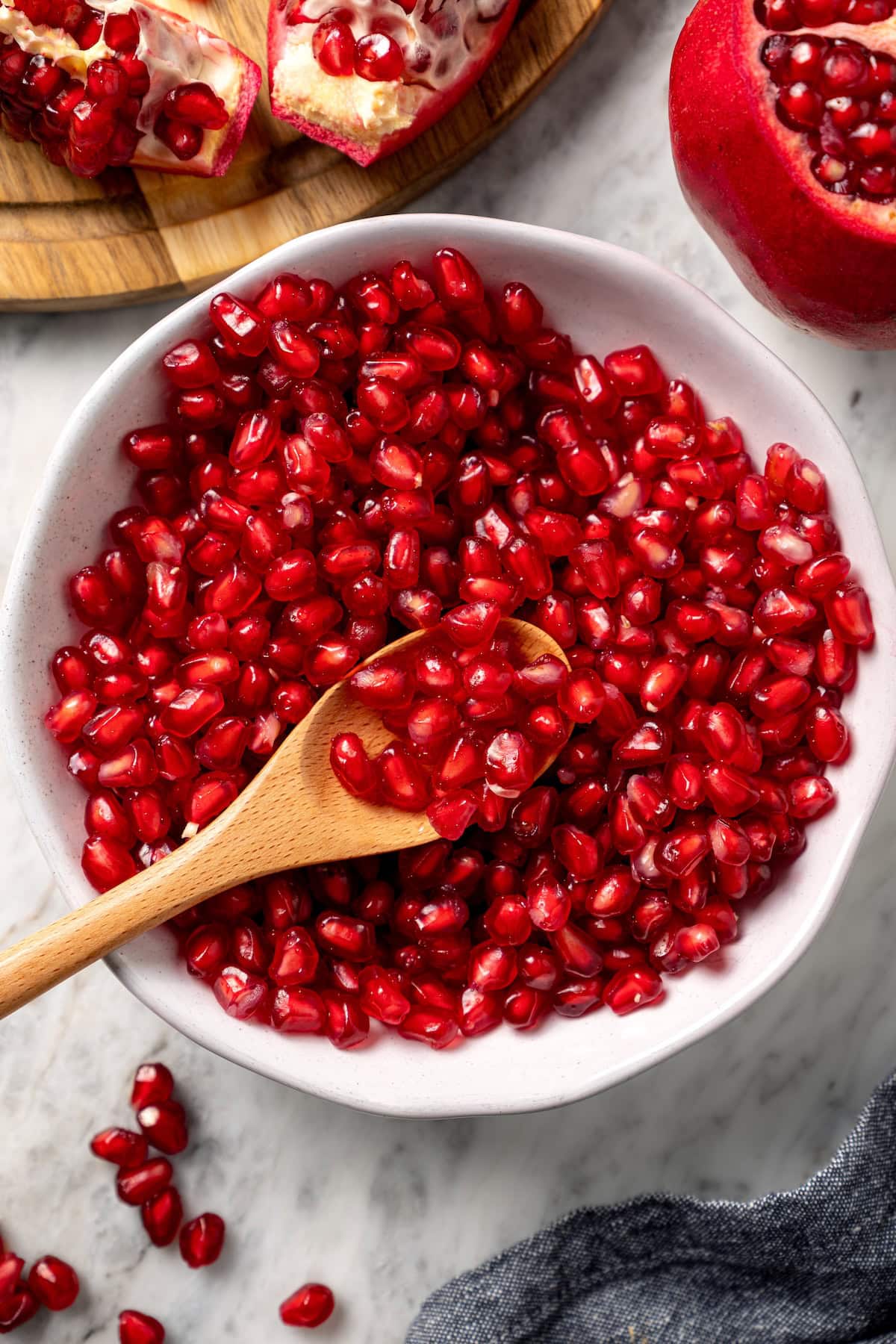
Wondering how to open a pomegranate without making a mess and staining your clothes? I’ll show you how to cut a pomegranate, remove the seeds, and enjoy this delicious fruit, no muss, no fuss!

The Easiest Way to Cut a Pomegranate
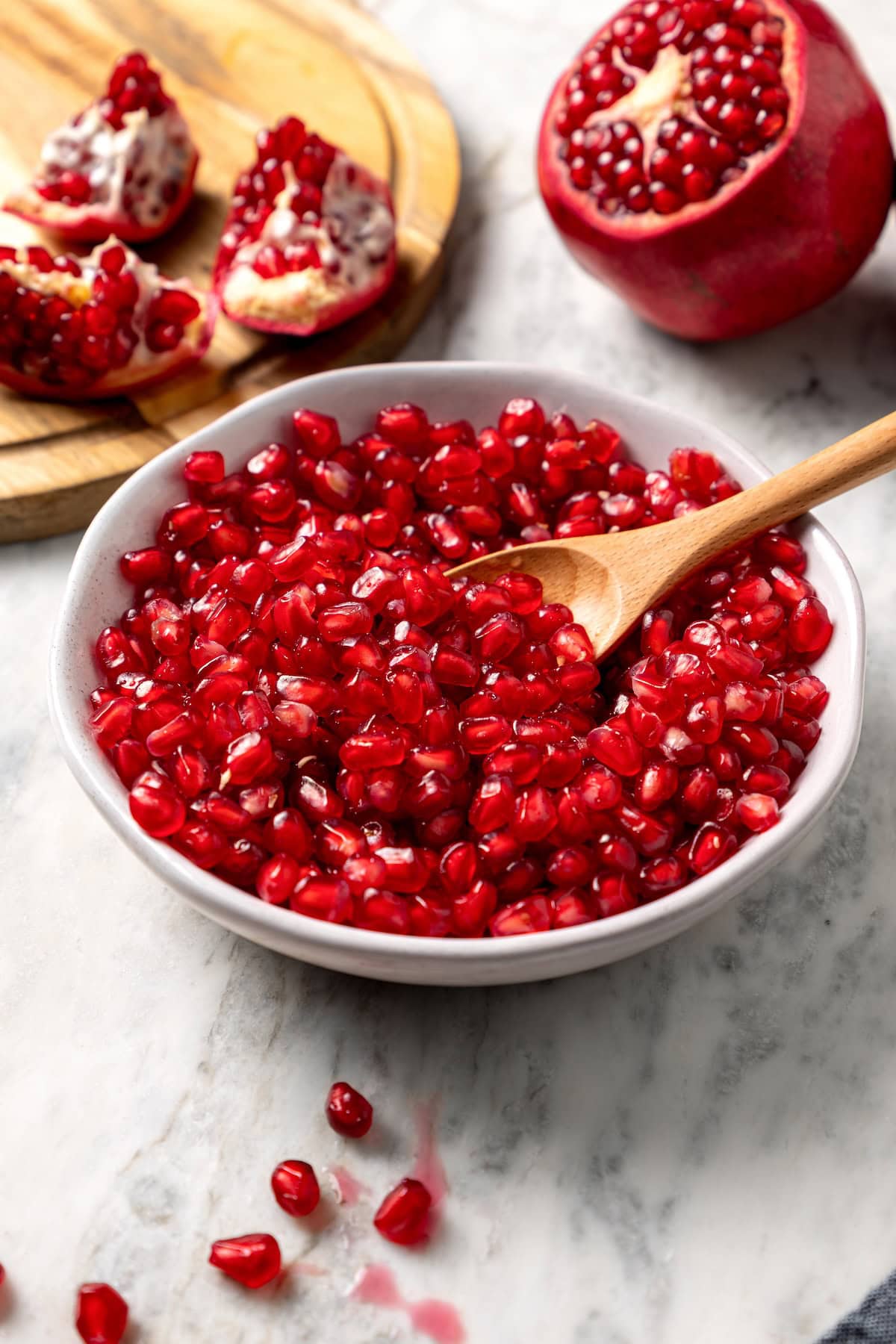
Pomegranates are one of my favorite fruits. The arils look like little ruby gems, and I love the burst of sweet-tart flavor they add to yogurt parfaits, salads, and bowls of overnight oats. I’ve tried so many different ways to cut and prep them, but this method for how to open a pomegranate is the best way.
Why You Can Trust This Method

Many years ago, I took a tour with POM, the leader in farming pomegranates in the US. That’s where I learned the proper way to open a pomegranate! If you’ve tried every method, bought every tool, and still end up with a mess everywhere, this little trick is going to be a game-changer.
So what’s the secret? The trick is to score the skin instead of cutting straight through the fruit. This makes it easier to pull the pomegranate apart without crushing or cutting the seeds inside.

The First Step: Picking the Perfect Pomegranate
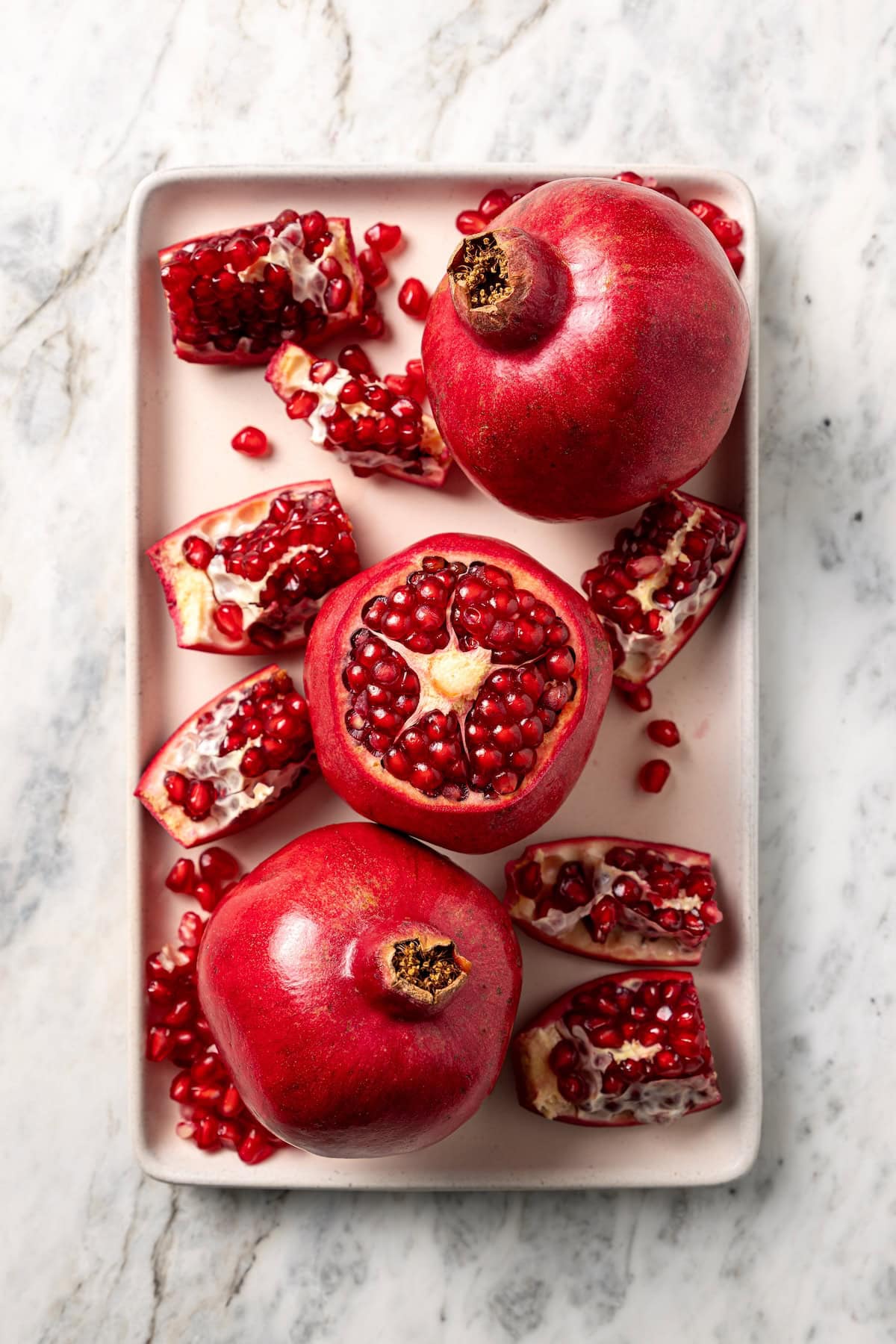
If you’ve never bought a pomegranate before (or even if you have!), you might not know what to look for. Here’s what I learned from the farmers at POM:
- Choose a pomegranate that’s heavy for its size. A heavy pomegranate usually means it’s full of juicy seeds.
- Firm, healthy skin: The outside should feel firm, without soft spots or bruises. (A few superficial scratches are just fine.)
- Slightly angular shape: Ripe pomegranates often look a little square-ish rather than round.
Once opened, the arils should be plump and juicy. Depending on the variety, they can range from pale pink to deep ruby red. Avoid arils that are shriveled, mushy, or discolored.
What You’ll Need
- A knife and cutting board
- A large bowl
- Water (for the water method)
- A wooden spoon (for the dry method)
How to Cut Open a Pomegranate Step by Step
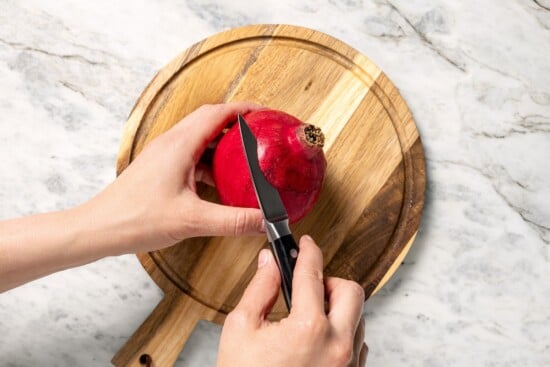
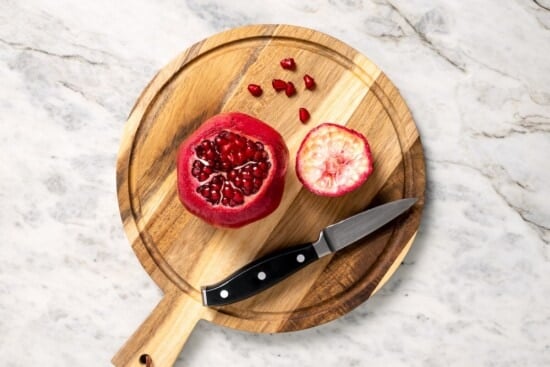
- Prepare the pomegranate: Rinse the pomegranate under cool water to clean the skin.
- Cut around the top: Place the pomegranate on a stable surface. Slice about 1 inch off the top (crown end) to reveal the inner segments, being careful not to cut too deep into the seeds. Remove the top; it will easily come off.
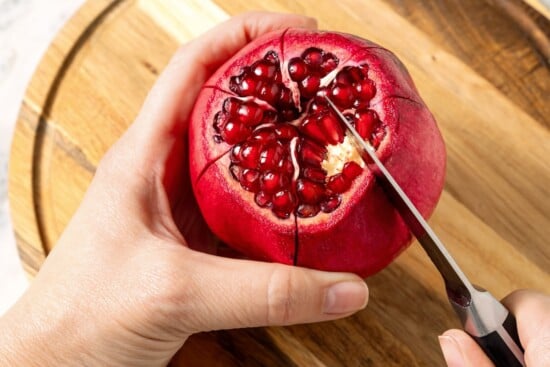

- Score the skin: Look for the natural ridges or membranes inside the pomegranate. Gently score the outer skin along these lines from the top to the bottom, about 5 to 6 sections, depending on the fruit size. Don’t cut too deep.
- Pull apart: Hold the pomegranate with both hands. Gently pull it apart into segments, like peeling open an orange.
How to Remove Seeds from a Pomegranate
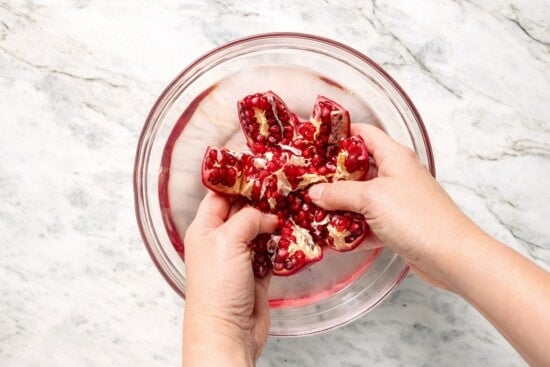
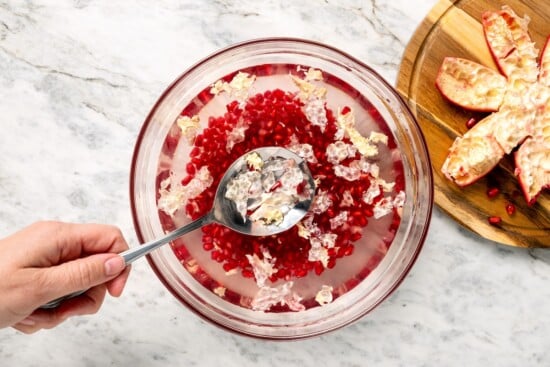
- Option 1: In Water
- Fill a large bowl with water.
- Submerge the pomegranate sections and gently loosen the seeds with your fingers. The seeds will sink, and the white membrane will float.
- Skim off the membrane, then drain the seeds.
- Option 2: Dry Method
- Hold a segment over a bowl and gently tap the back with a wooden spoon to release the seeds.
Gina’s Test Kitchen Tips
- Wear an apron or dark clothing to avoid staining, as pomegranate juice can splash. I’ve made the mistake of wearing white while cutting a pomegranate before, trust me on this one! Even though this method is less messy, it’s still possible to accidentally crush or cut a seed and stain your clothes.
- Use the water method for less mess: Working underwater helps contain the seeds and dilutes any juices that leak out.
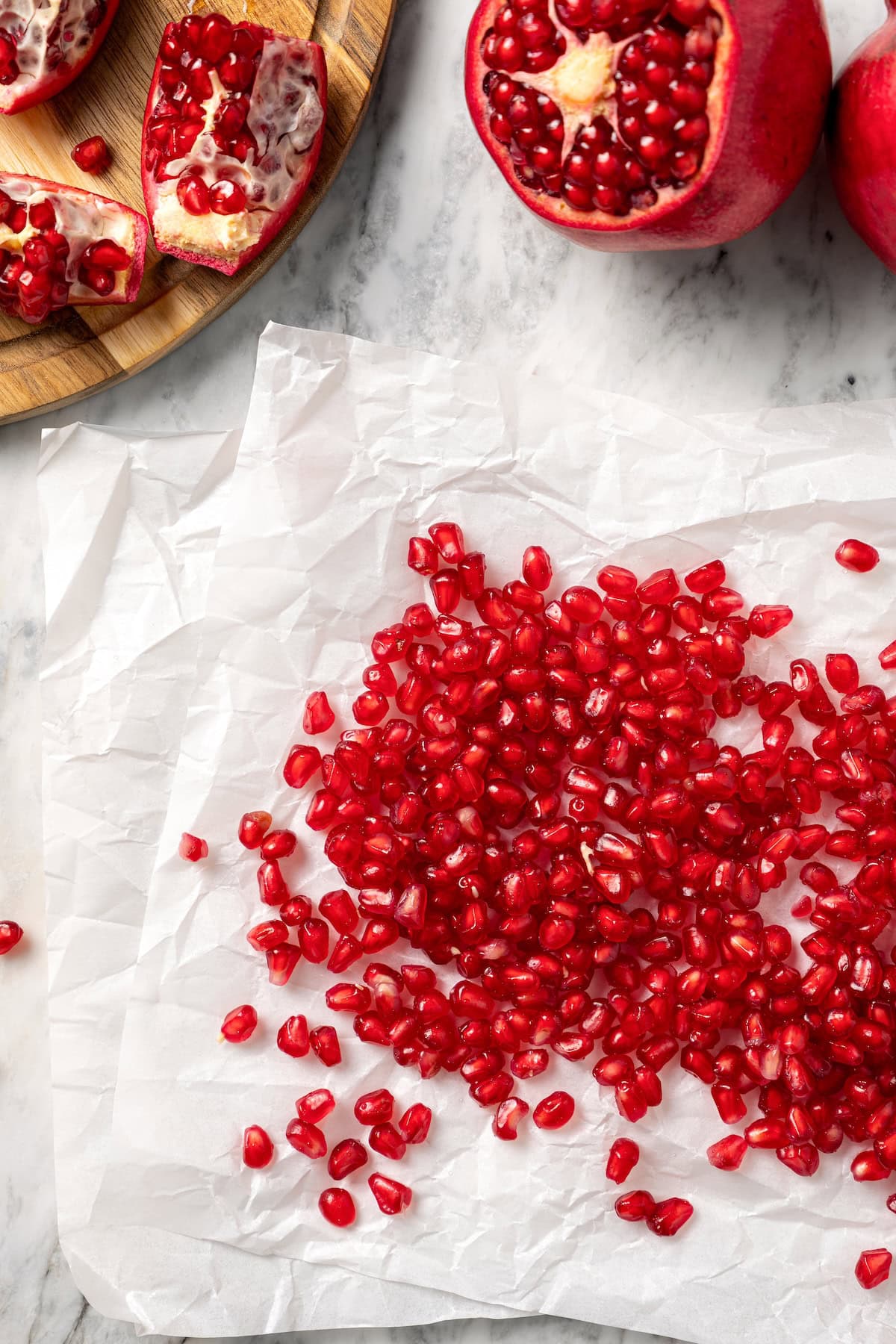
Ways to Enjoy Pomegranate Seeds
Here are some delicious ways to use pomegranate arils in your recipes:
- Yogurt parfaits: Layer Greek yogurt, granola, pomegranate seeds, and a drizzle of honey.
- Salads: Add them to my delicata squash burrata pomegranate salad for a pop of color and sweetness.
- Baked goods: Try them in these pomegranate scones or muffins.
- Oatmeal: Sprinkle them over warm oatmeal or stir them into overnight oats. This Instant Pot baked oatmeal would be excellent with pomegranate arils sprinkled on top too!
- Drinks: Use them as a garnish for mocktails or cocktails.
Proper Storage
- Whole pomegranate: You can store whole pomegranates in the refrigerator for several weeks, depending on how fresh they were when purchased. You can also keep them at room temperature for a few days if you plan to eat them soon.
- Refrigerator: Keep the arils in an airtight container in the fridge for up to 5 days.
- Freezer: Yes, you can freeze pomegranate seeds! Spread the arils in a single layer on a parchment-lined baking sheet and freeze until they’re solid. Transfer the frozen seeds to a freezer bag or container and freeze for up to 3 months. I love adding them to yogurt and eating them straight out of the freezer.
Frequently Asked Questions
No. Pomegranates do not continue ripening after harvest, so it’s important to choose one that feels heavy and firm when shopping.
Some varieties of pomegranates have deep red skin, while others are lighter pink, orange-red, or yellowish when ripe. Because of these color variations, weight is the best test for ripeness.
The white, spongy part is called the membrane or pith. It tastes bitter, so pick through the arils and remove as much of it as you can before enjoying your pomegranate seeds.
Yes, the juicy arils are edible, including the small, crunchy seed inside each one.