

If you’d like to learn how to cook spaghetti squash, baked spaghetti squash is quick, easy, and comes out tender every time. This is my foolproof roasting method, plus tips and delicious serving ideas!
Oven occupied? You can also cook spaghetti squash in the slow cooker or microwave. All three methods are included below.
Easy Spaghetti Squash Recipe
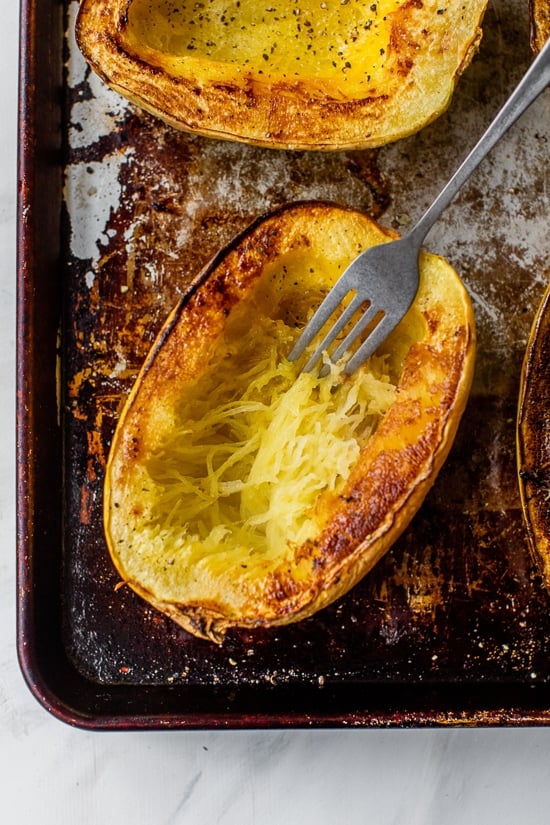
Spaghetti squash is such a versatile ingredient. It’s one of the easiest to prepare, and I think it’s highly underrated! One of the tastiest ways to cook spaghetti squash is by baking it in the oven, which is my personal favorite. Baked spaghetti squash brings out its flavor and creates perfectly tender squash every time. Once cooked, the flesh shreds easily into long, thin squash strands that resemble spaghetti (hence the name). It’s so good, I can eat it right from the shell, seasoned with olive oil or butter and a little garlic, salt, and pepper.
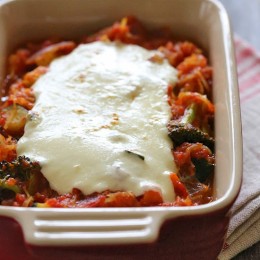
I often serve spaghetti squash like pasta with tomato sauce like my Bolognese sauce or slow cooker beef ragu, and I love it in my cheesy baked spaghetti squash and cheese and this spaghetti squash lasagna, too.
Why Baked Spaghetti Squash Is My Favorite

Spaghetti squash is a popular pasta replacement, and it makes a lovely weeknight side dish or entree on its own. I’m going to show you just how simple this roasting method is, plus more delicious ways to enjoy your squash once it’s baked. Here’s why I love having baked spaghetti squash on my regular dinner rotation:
- It’s a great alternative to pasta or rice as a base for your favorite sauces, toppings, and proteins.
- The tender spaghetti squash strands tend to take on the flavors of any seasonings and ingredients you add to them.
- Low in calories and high in fiber, so it’s very filling. And unlike traditional pasta, it’s naturally gluten-free.
- More ways to cook: Beyond the oven, you can prepare spaghetti squash in the microwave or the slow cooker. All three options work great, so it’s just a matter of how much time you have.

Choosing Your Spaghetti Squash
You only need one ingredient: Spaghetti squash! Spaghetti squash comes in many shapes, sizes, and colors, though the most popular type here in the US is oval-shaped and yellow-colored. When choosing the best spaghetti squash from the produce aisle, look for the following:
- Weight: The squash should feel heavy for its size.
- Appearance: Look for firm skin that’s golden-yellow with no soft spots or cracks.
- Check the stem: The squash’s stem should be dry.
How to Cut Spaghetti Squash
Cutting a spaghetti squash isn’t difficult. The key is to use a sturdy cutting board and a large, sharp knife. I like to place a dishcloth underneath my cutting board to stabilize it and keep it from slipping. Here’s the best way to safely cut a spaghetti squash for baking:
- Microwave it first. Microwaving the squash for 2-3 minutes softens it and makes it easier to cut.
- Cut off both ends. Next, use a sharp knife to trim off the stem and bottom end of the squash.
- Slice lengthwise. Lastly, lay the spaghetti squash horizontally on a cutting board. Hold it tightly (hands away from the knife!), and slice the squash down the middle from top to bottom.
How to Bake Spaghetti Squash
Here are the steps to bake spaghetti squash in the oven. See the recipe card for the printable details, and scroll for alternative cooking methods.

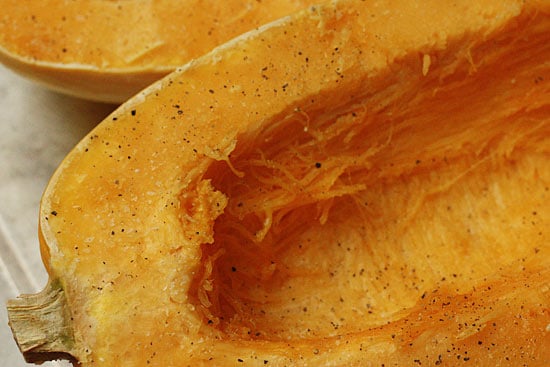
- Prepare. Cut the squash in half according to the directions above. Scoop out the seeds and fibers, then sprinkle with salt and pepper.
- Bake. Place the squash, cut side up, on a baking sheet. Bake at 350ºF for 1 hour, or until the squash is easy to pierce with a fork.
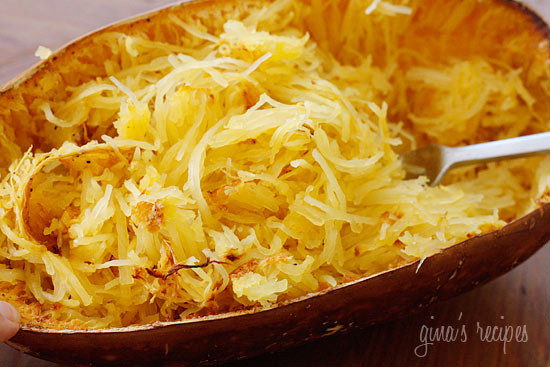
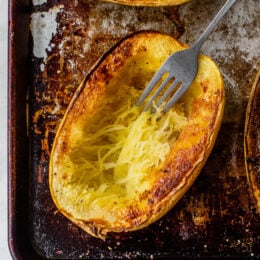
- Shred. Let the squash cool for about 10 minutes, then scrape the flesh with a fork to create long, spaghetti-like strands.
Knowing When Spaghetti Squash is Cooked
Baked spaghetti squash is done when the skin gives easily under pressure, and the flesh is tender. You should be able to easily pierce the skin with a fork, and there shouldn’t be any resistance when cutting the squash. If there is, return the squash to the oven or you can finish it off in the microwave for a minute or two, until done.

Alternative Cooking Methods
Oven-roasting is my preferred method, but you can also cook spaghetti squash in the microwave or slow cooker. Both of these methods are great for easy weeknight dinners!
- Slow cooker: The slow cooker method is an easy set-it-and-forget-it way to make spaghetti squash. To cook spaghetti squash in the slow cooker, you don’t need to cut it first. Instead, prick the skin all over with a fork or knife. Place the squash inside the slow cooker with ½ cup of water, and cook for 4-6 hours on Low. Once cooked, cool the squash for 15 minutes, then slice it in half, scoop out the seeds, and shred into strands. You might also love this one-pot spaghetti squash and meat sauce made in the slow cooker.
- Microwave: If you need to cook spaghetti squash quickly, the microwave is a great option. Again, prick the squash all over so it can steam. Place it in a microwave-safe dish and heat for 6 minutes on high. Turn the squash over, and heat for 6 more minutes, until fork-tender. Once it’s cooled for 10 minutes, cut it in half and shred it. If there is any resistance, pop it back in the microwave for a few more minutes.

Baked Spaghetti Squash
Ingredients
- 1 large ripe spaghetti squash
- salt and fresh pepper, to taste
Instructions
- Preheat oven to 350°F.
- Cut the squash in half lengthwise, scoop out the seeds and fibers with a spoon.
- Place on a baking sheet, cut side up and sprinkle with salt and pepper.
- Bake at 350°F about 1 hour or until the skin gives easily under pressure and the inside is tender. Remove from oven and let it cool 10 minutes.
- Using a fork, scrape out the squash flesh a little at a time. It will separate into spaghetti-like strands.
- Place in a serving dish and serve hot.
Last Step:
Please leave a rating and comment letting us know how you liked this recipe! This helps our business to thrive and continue providing free, high-quality recipes for you.Notes
- Slow cooker: Prick the skin all over with a fork or knife. Add the squash to the slow cooker with ½ cup of water. Cook for 4-6 hours on Low. Cool the squash for 15 minutes, then slice it in half, scoop out the seeds, and shred into strands.
- Microwave: Prick the squash all over. Use a microwave-safe dish and cook for 6 minutes on high, flip the squash, and cook for 6 more minutes, or until fork-tender. Once it’s cooled, cut it in half and shred it.
Nutrition
Serving Suggestions
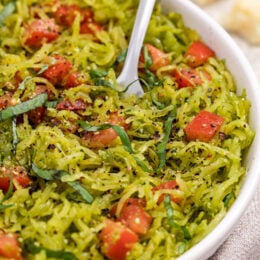
I love spaghetti squash topped with marinara sauce or basil pesto for a quick and easy, low-carb “pasta” dinner. These are some more of my favorite ways to serve spaghetti squash as it’s own stand-alone meal.




More Ways to Eat Spaghetti Squash
There really are so many ways to eat it that go beyond your typical stand-in for pasta!


Storing Leftovers
- Refrigerate. Baked spaghetti squash will last for 4 to 5 days in an airtight container in the fridge.
- Freeze. Squash also freezes well. Cool completely, then transfer to freezer storage bags. I like to divide it up by how much my family will eat in one meal. Be sure to squeeze as much air as possible out of the bag. Thaw in the fridge.
- Reheat. The microwave is the easiest way to reheat leftovers, though you can also warm them up on the stovetop.